Perfume Maceration: Does Your Fragrance Really Need It?
You buy a new perfume, spray it for the first time, and something feels wrong.
The fragrance may smell sharper than expected. The projection may seem weaker than the reviews suggested. Or perhaps someone tells you:
“Just macerate it for a few weeks. It will become much stronger.”
This advice is extremely common in fragrance communities, especially with Arabian and Middle Eastern perfumes.
But does perfume maceration really work after you buy a bottle?
The short answer: Maceration is a real process in perfume production, but leaving a finished perfume bottle at home is not exactly the same thing. A fragrance may change slightly while resting or aging, but stronger projection or longer longevity is never guaranteed.
This guide explains what perfume maceration actually means, how it differs from maturation and bottle aging, whether perfumes such as Lattafa or Afnan need resting, and how to store fragrances safely—especially in Bangladesh’s hot and humid climate.
What Is Perfume Maceration?
In professional perfume manufacturing, maceration commonly refers to a controlled resting period after fragrance concentrate has been mixed with alcohol or another carrier.
During this period, the perfume mixture is allowed to become more uniform and stable before later production steps such as filtration and bottling.
However, perfume terminology is not completely standardized.
- Maturation: Resting the fragrance concentrate before dilution.
- Maceration: Resting the diluted fragrance mixture during perfume production.
- Bottle resting or aging: Gradual changes that may occur after the finished fragrance has already been bottled.
Different manufacturers may use these terms somewhat differently.
The important distinction for perfume buyers is simpler:
Professional maceration happens under controlled manufacturing conditions. Keeping a retail bottle in your cupboard is better described as resting or aging the fragrance.
For additional industry context, the
Society of Scent’s Perfumer’s Glossary describes maceration as an important fine-fragrance manufacturing stage in which the fragrance mixture is allowed to rest in alcohol so the ingredients can integrate into a more homogeneous blend. Terminology can vary between perfumers and manufacturers, which is why consumer “bottle resting” should not automatically be treated as identical to professional production-stage maceration.
Maceration vs Maturation vs Aging
| Term | Usually Refers To | When It Happens |
|---|---|---|
| Maturation | Resting the fragrance concentrate | Before dilution |
| Maceration | Resting perfume after dilution with alcohol | During manufacturing |
| Bottle Resting or Aging | Changes occurring inside a finished perfume bottle | After bottling |
Because terminology varies between perfume houses, you may occasionally see different definitions.
For consumers, however, the key point is that you cannot perfectly reproduce a manufacturer’s controlled maceration process simply by leaving a perfume bottle untouched at home.
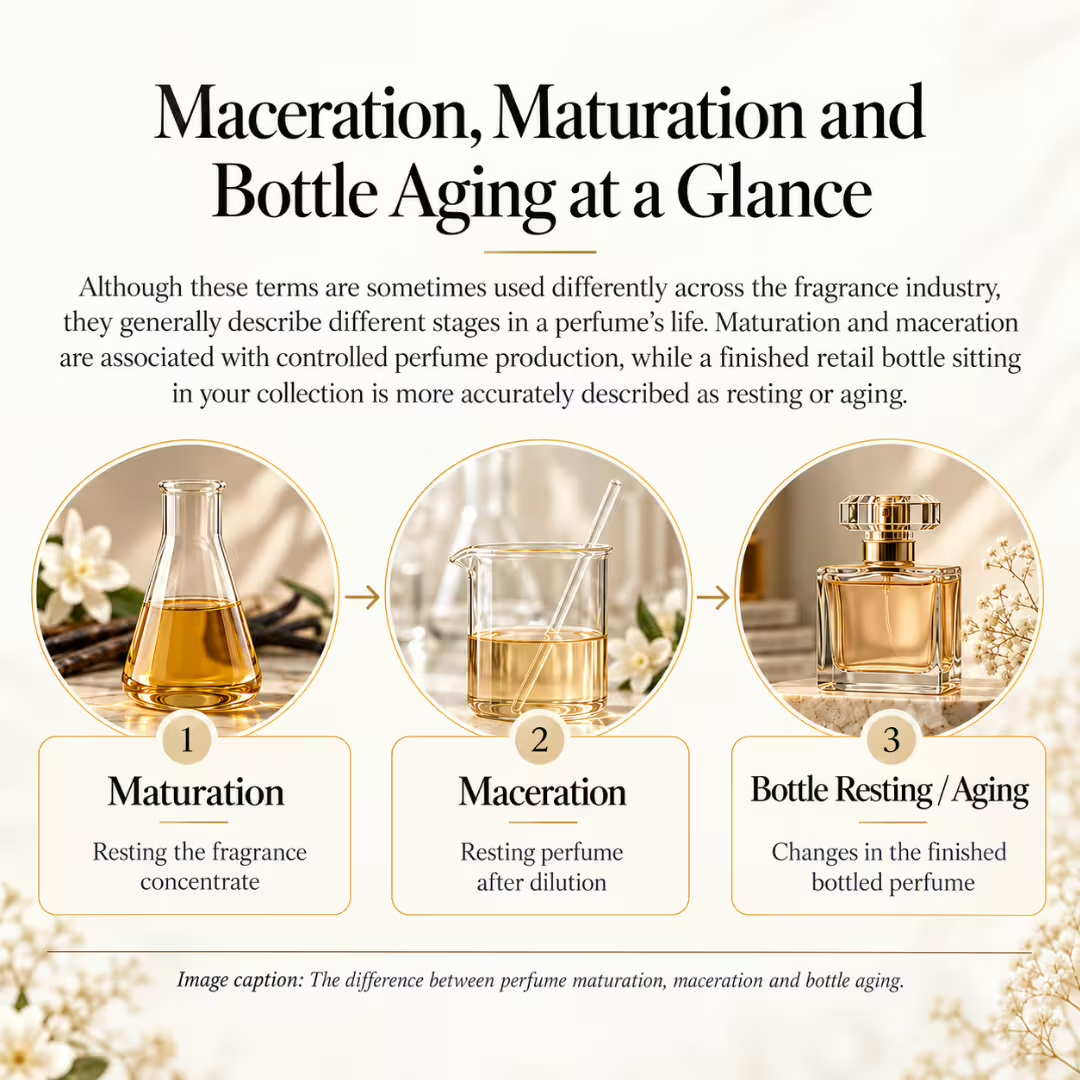
Maceration, Maturation and Bottle Aging at a Glance
Although these terms are sometimes used differently across the fragrance industry, they generally describe different stages in a perfume’s life. Maturation and maceration are associated with controlled perfume production, while a finished retail bottle sitting in your collection is more accurately described as resting or aging.
Image caption: The difference between perfume maturation, maceration and bottle aging.
Does Perfume Maceration Really Work?
A finished perfume can sometimes smell different after several weeks or months.
That does not automatically mean that home maceration has dramatically improved it.
Several things may explain why a perfume appears different later.
1. The Perfume Has Settled After Transportation
Perfumes may experience significant temperature changes while being transported.
A bottle delivered through hot weather may therefore smell slightly different immediately after arrival compared with how it smells after returning to a stable indoor temperature.
Allowing the bottle to settle before judging it can be sensible.
2. Your Perception of the Fragrance Changes
Your nose and brain adapt quickly to smells.
The first time you wear a fragrance, certain notes may dominate your attention. After several wearings, you may begin noticing different parts of the composition.
This can make the fragrance seem smoother or more complex even when the liquid itself has changed very little.
3. The Fragrance May Slowly Age
Perfume contains many aromatic materials that can gradually change over time.
A small amount of aging may alter how the perfume smells.
However, aging does not guarantee improvement.
A perfume may become smoother, remain almost unchanged, or eventually deteriorate depending on its formula, packaging, storage conditions and exposure to heat, light and air.
Does Maceration Make Perfume Stronger?
Not necessarily.
This is one of the biggest misconceptions surrounding perfume maceration.
Leaving a fragrance for several weeks does not increase the amount of fragrance oil inside the bottle.
Therefore, you should not expect every fragrance to suddenly become twice as strong simply because it has been stored for a month.
Sometimes users report improvements in:
- Smoothness
- Blend between notes
- Perceived richness
- Dry-down
- Projection
- Longevity
But these experiences are not universal.
Performance also depends on factors such as:
- Fragrance formula
- Concentration
- Skin condition
- Application method
- Temperature
- Humidity
- Individual perception
- Olfactory adaptation
For a deeper explanation, read our guide on
4 Common Perfume Industry Lies
.
Should You Spray Perfume Before Letting It Rest?
You may see advice online telling you to spray a new perfume 5–10 times specifically to introduce oxygen into the bottle.
This is unnecessary.
You can spray the perfume normally to test it and prime the atomizer, but there is no need to deliberately add extra air to encourage “maceration.”
Oxygen exposure contributes to oxidation over time. Oxidation is not automatically the same thing as beneficial perfume maturation.
Therefore, avoid intentionally:
- Leaving the bottle open
- Removing the atomizer
- Pumping unnecessary air into the bottle
- Shaking the bottle repeatedly
- Heating the perfume
- Leaving it in direct sunlight
More oxygen, heat or light does not mean better maceration.
A Safe 4-Step Method for Resting a New Perfume
If a newly purchased fragrance does not smell or perform as expected, there is nothing wrong with giving it some time before reaching a final conclusion.
Step 1: Let the Bottle Reach a Stable Temperature
After receiving your perfume, especially after delivery during very hot weather, keep it indoors in a cool and dark location.
You can allow approximately 24–48 hours before making your final judgement.
There is no need to shake the bottle.
Step 2: Test the Perfume Normally
Spray it on clean skin and test it normally.
Pay attention to:
- Opening
- Heart notes
- Dry-down
- Projection
- Longevity
Do not judge a fragrance from the first five minutes alone.
Step 3: Store It Properly
Keep the perfume:
- Upright
- Away from direct sunlight
- Away from excessive heat
- Away from excessive humidity
- Inside its original box when practical
- In a cupboard, drawer or wardrobe with relatively stable temperature
Step 4: Retest After Some Time
If you still believe the perfume needs time, retest it after one or several weeks.
Try to use similar conditions when comparing performance—for example, roughly the same number of sprays and similar application points.
If it smells better later, enjoy it.
But remember that the change does not prove that every perfume requires home maceration.
How Long Should You Rest a Perfume?
There is no universal resting period for finished retail fragrances.
Claims such as “every perfume needs exactly two weeks” or “Arabian perfume requires three months of maceration” should be treated cautiously.
A practical approach is:
- After delivery: Allow the bottle to return to stable room conditions.
- If performance seems unusual: Test it again after approximately 1–2 weeks.
- If you are still curious: Compare it again after several more weeks.
The purpose is not to follow a compulsory maceration schedule. It is simply to avoid judging an unfamiliar fragrance from one spray immediately after transportation.
Do Lattafa, Afnan and Arabian Perfumes Need Maceration?
This is one of the most frequently asked questions among fragrance buyers.
The answer: Not automatically.
Lattafa, Afnan, Rasasi, Armaf, Swiss Arabian and other Middle Eastern perfume brands do not operate under a different set of chemical rules simply because they are Arabian fragrance houses.
A genuine finished perfume should normally be usable when you purchase it.
However, individual bottles may appear different because of:
- Manufacturing date
- Batch variation
- Transportation
- Storage conditions
- Formula differences
- Personal expectations
- Individual skin chemistry
Some fragrance enthusiasts believe that particular bottles improve after several weeks of resting. That experience can be genuine for the wearer, but it should not become a universal rule for every Arabian perfume.
Better rule: Test the fragrance first. If you are disappointed, store it properly and retest it later before deciding whether you dislike it.
Why Does a New Perfume Sometimes Smell Mostly of Alcohol?
An alcohol impression immediately after spraying does not necessarily mean that the perfume is fake or unfinished.
Most alcohol-based fragrances naturally contain alcohol, which evaporates quickly after application.
Allow the fragrance a short period to develop on your skin before assessing the scent.
However, if the fragrance consistently smells abnormal compared with a trusted reference bottle, consider other possibilities such as:
- Storage damage
- Counterfeit product
- Formula or batch differences
- Damaged atomizer
- Incorrect expectations based on reviews
Buying from a reliable source remains important.
Explore
original perfumes in Bangladesh
from Perfume Shop Bangladesh.
How to Store Perfume in Bangladesh
Proper perfume storage is particularly important in Bangladesh because temperatures can become high for much of the year.
Heat, sunlight and repeated temperature changes can accelerate unwanted changes in fragrance materials.
Best Places to Store Perfume
- Bedroom cupboard
- Wardrobe
- Closed cabinet
- Dresser drawer
- Original perfume box
Choose somewhere dark with a relatively stable indoor temperature.
Places You Should Avoid
Inside a Car
Cars can become extremely hot, particularly when parked in sunlight.
On a Windowsill
Direct sunlight and heat are unnecessary stressors for a fragrance.
Beside a Sunny Window
Even decorative perfume displays can receive prolonged light exposure.
Inside a Hot Bathroom
Bathrooms frequently experience changes in temperature and humidity.
Near Ovens or Heat-Producing Appliances
Repeated heat exposure is not ideal for long-term perfume storage.
Proper storage is also supported by fragrance-industry guidance.
The Perfume Society
recommends keeping fragrances away from light and heat, noting that a dark cupboard or drawer is preferable to locations such as sunny dressing tables or bathrooms where heat and temperature changes can affect the scent.
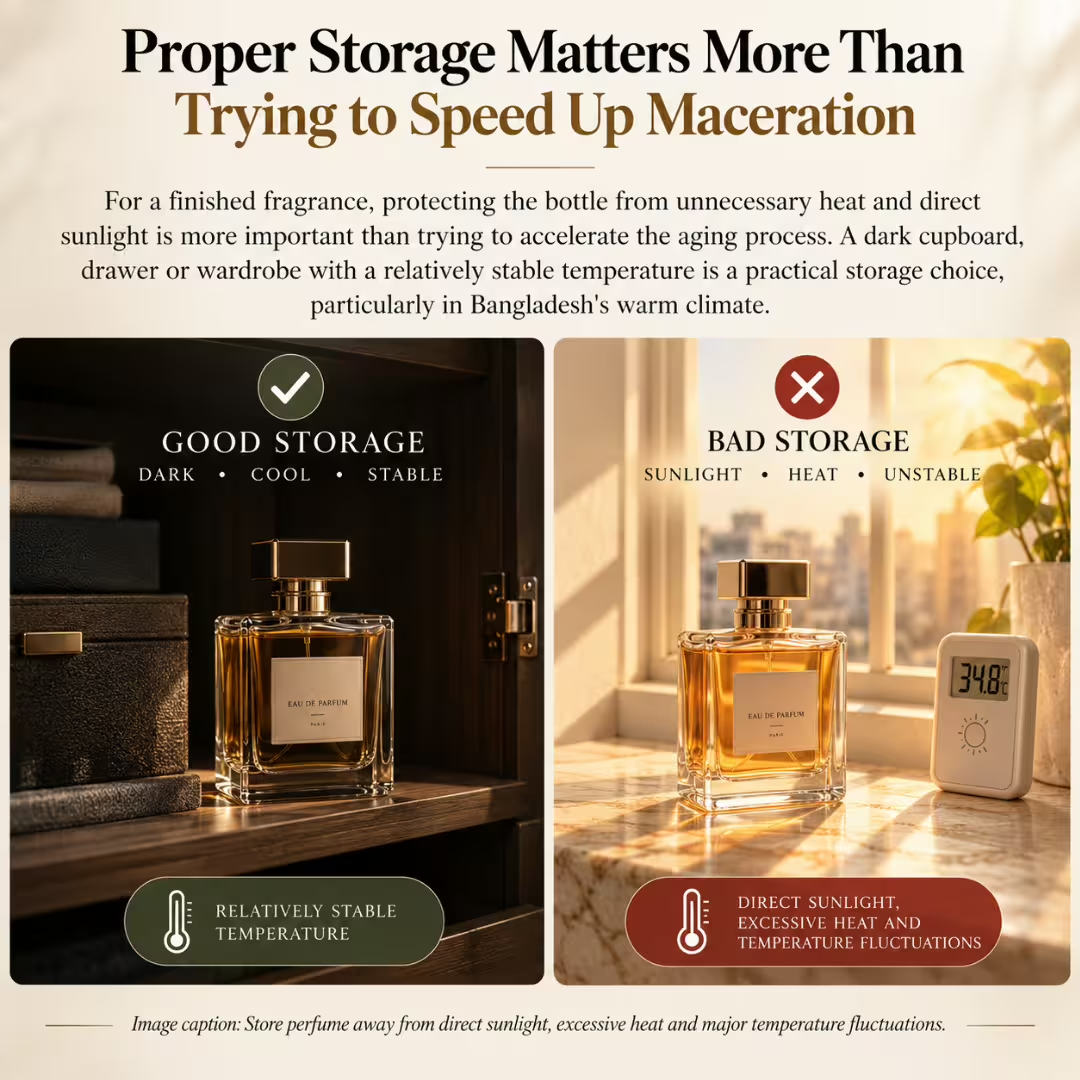
Proper Storage Matters More Than Trying to Speed Up Maceration
For a finished fragrance, protecting the bottle from unnecessary heat and direct sunlight is more important than trying to accelerate the aging process. A dark cupboard, drawer or wardrobe with a relatively stable temperature is a practical storage choice, particularly in Bangladesh’s warm climate.
Image caption: Store perfume away from direct sunlight, excessive heat and major temperature fluctuations.
Should Perfume Be Kept in a Refrigerator?
For most everyday fragrance collections, refrigeration is unnecessary.
A cool, dark and stable cupboard is usually a simpler option.
Repeatedly moving a perfume between very cold and warm environments is also undesirable.
The objective is temperature stability, not making the perfume as cold as possible.
Does Perfume Become Better With Age?
Some perfumes can smell pleasant for many years when stored correctly.
Certain compositions may also seem smoother or richer as they age.
But perfume should not be treated exactly like wine.
Age does not automatically mean improvement.
Over long periods, oxidation and degradation can eventually change:
- Colour
- Opening notes
- Balance
- Freshness
- Overall scent character
Therefore, proper storage is more important than deliberately trying to make your fragrance age faster.
Signs Your Perfume May Have Changed
Changes do not always mean that a fragrance has gone bad.
A slight colour change can occur naturally in some formulas.
More concerning signs include:
- A noticeably sour or unusual smell
- Major disappearance of the original opening
- A fragrance profile that has changed dramatically
- Visible contamination
- Leakage or atomizer problems
If the perfume still smells pleasant and performs normally, a small change in colour alone does not necessarily mean it should be discarded.
Common Perfume Maceration Myths
Myth 1: Every New Perfume Needs Maceration
Reality: Finished perfumes are normally designed to be wearable when sold.
Myth 2: You Must Spray 10 Times and Add Oxygen
Reality: Normal spraying is enough. Deliberately increasing oxygen exposure is unnecessary.
Myth 3: Arabian Perfumes Always Need Months of Maceration
Reality: Some users report changes after resting certain fragrances, but there is no universal rule applying to every Middle Eastern perfume.
Myth 4: Maceration Always Improves Longevity
Reality: Resting does not guarantee stronger performance.
Myth 5: Keeping Perfume Somewhere Warm Speeds Up Maceration
Reality: Heat can accelerate unwanted chemical changes and should not be used as a perfume-improvement technique.
Frequently Asked Questions About Perfume Maceration
Can You Macerate Perfume at Home?
Not in exactly the same controlled way used during commercial perfume manufacturing. You can allow a finished perfume to rest or age naturally while storing it correctly.
How Long Should I Macerate a Perfume?
There is no universal period for a finished retail bottle. If a perfume seems unusual after delivery, let it stabilize and retest it after one or several weeks rather than following a fixed maceration schedule.
Should I Spray My Perfume Before Resting It?
You can spray it normally for testing. You do not need to spray repeatedly simply to introduce oxygen.
Does Perfume Get Stronger After Maceration?
Sometimes people perceive stronger or smoother performance after a bottle has rested, but this is not guaranteed.
Do Lattafa Perfumes Need Maceration?
Not necessarily. Lattafa fragrances should normally be wearable when purchased. If a bottle does not meet your expectations, store it correctly and test it again later before making a final judgement.
Do Afnan Perfumes Need Maceration?
The same principle applies. There is no rule that every Afnan fragrance must be rested before use.
Should Perfume Be Stored in Its Box?
Keeping the original box can help protect the bottle from light and is a convenient storage option.
Can Sunlight Damage Perfume?
Long-term exposure to light and heat can accelerate unwanted changes in fragrance ingredients, so perfumes are better kept away from direct sunlight.
Final Verdict: Does Your Perfume Need Maceration?
Probably not in the way social media often describes it.
Professional perfume maceration is primarily a manufacturing process performed under controlled conditions.
Once the finished fragrance reaches you, allowing it to rest can be useful—particularly after transportation or if you want to compare its performance over time—but there is no guarantee that waiting will make every perfume stronger, smoother or longer-lasting.
The safest approach is simple:
Test it normally. Store it correctly. Give it time if necessary. Then judge the fragrance based on repeated wear rather than maceration myths.
Most importantly, do not intentionally expose your perfume to excessive oxygen, sunlight or heat in an attempt to improve its performance.
Looking for Authentic Perfumes in Bangladesh?
Perfume Shop Bangladesh has been serving fragrance lovers since 2019, with a focus on authentic international and Arabian fragrances.
Explore our latest collection of
original perfumes in Bangladesh
and discover fragrances from popular designer and Middle Eastern perfume houses.
Perfume Shop Bangladesh — Original Perfumes Since 2019.